


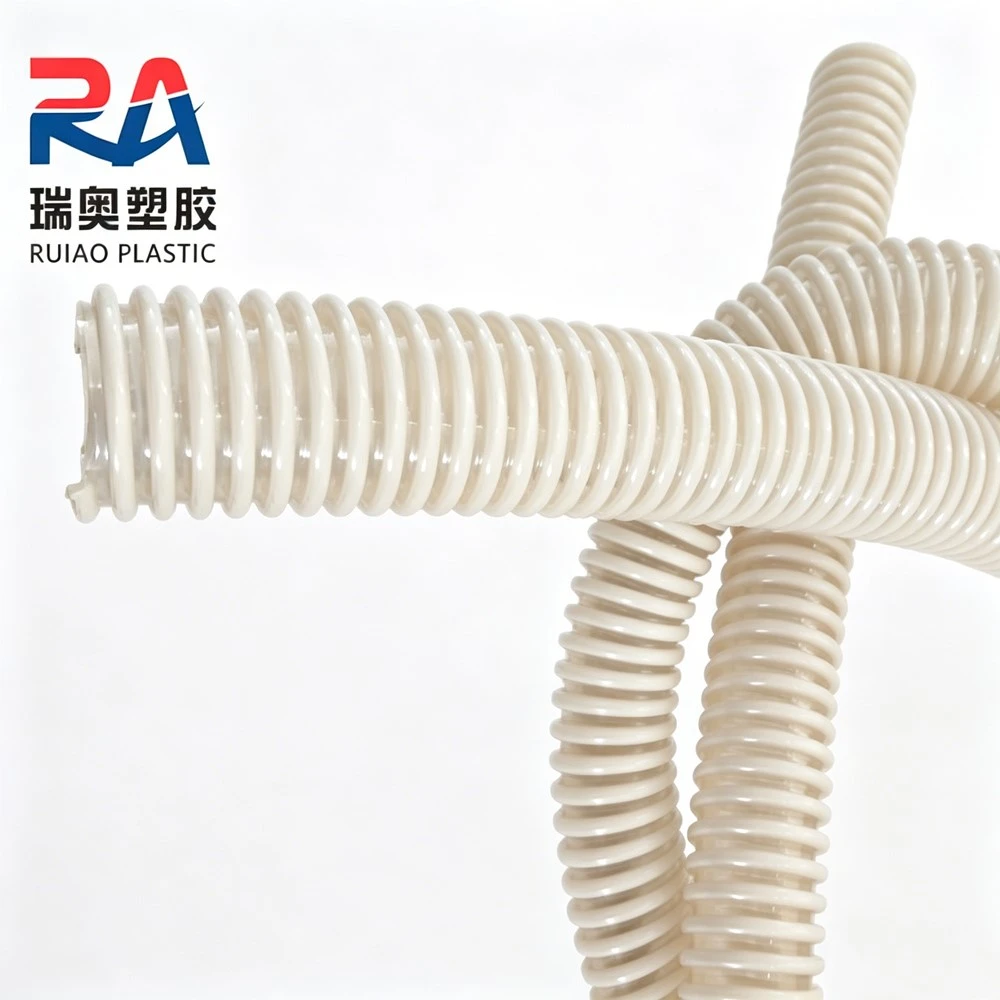
Temperature variations will impose certain impacts on the physical state, flexible performance and service life of PU Plastic Reinforced Hose. All polymer hoses have temperature‑adaptation properties. PU Plastic Reinforced Hose shows favorable temperature adaptability among similar products. Conventional temperature shifts only trigger minor physical‑state changes without damage or functional failure. Only extreme high temperature, extreme low temperature and frequent alternating hot‑cold conditions will bring limited influences on hose status and service life, which remain controllable and will not interfere with normal usage. Under ambient temperature around 20℃‑25℃, PU Plastic Reinforced Hose delivers optimal comprehensive performance with moderate flexibility, excellent resilience, outstanding compression‑ and bending‑resistance and anti‑deformation capacity. Plastic‑reinforcement supporting structures work perfectly with PU pipe walls for smooth material delivery, resistance against collapse and deformation. This temperature range covers most indoor and normal‑temperature working scenarios.
Under low‑temperature conditions, regular physical changes will take place. As temperature drops, molecular activity of PU materials decreases moderately, pipe walls harden slightly and flexibility declines compared with ambient‑temperature status. Unlike ordinary PVC hoses prone to brittle fracture under cold conditions, PU Plastic Reinforced Hose features great low‑temperature tolerance. It will not suffer embrittlement, cracking or sharp creases under regular low‑temperature environments and can still be bent, dragged and reeled normally without structural‑stability loss. Only under extremely low temperatures will hardness rise remarkably and flexibility drop greatly. Violent bending or rolling may cause minor damage under such circumstances. Therefore, stretch the hose in advance and bend it gently instead of applying brute force in frigid environments.
Under high‑temperature conditions, hose behaviors are opposite to low‑temperature scenarios. Rising temperatures boost molecular activity of PU materials. Pipe walls soften slightly with improved flexibility and smoother bending, delivering softer hand‑feel and better crease‑resistance. However, sustained high‑temperature exposure, direct sunlight or proximity to heat sources will trigger excessive softening. Long‑term high‑temperature exposure speeds up natural material aging, resulting in deteriorated resilience, slight tackiness and accelerated ageing. Continuous high‑temperature conditions also impair the structural stability of plastic reinforcements. Long‑term high‑temperature exposure during storage and service will shorten overall service life.
In addition, frequent alternating hot‑cold environments constitute a major factor affecting service life. Repeated thermal expansion and contraction trigger frequent stretching‑shrinking of molecular structures, accelerating natural aging cumulatively and bringing about premature hardening, deteriorated resilience and reduced toughness. In short, ordinary seasonal temperature fluctuations barely impair the performance of PU Plastic Reinforced Hose and reflect normal physical variations. Service‑life extension and stable performance can be realized by avoiding sustained extreme high‑temperature sun exposure, violent operation under frigid conditions and drastic frequent temperature alternations. It adapts to various general‑purpose indoor and outdoor scenarios under four‑season conditions and outperforms ordinary hoses in temperature adaptability.