


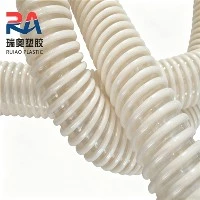
Corrosion resistance serves as one of the core advantages of PU Plastic Reinforced Hose and distinguishes it from conventional PVC and rubber hoses. It features superior overall resistance against corrosion, aging and medium erosion and adapts to most civil and ordinary industrial corrosive working conditions with stable performance. It merely shows low tolerance towards a small number of highly corrosive chemical media, with clear applicable scenarios and high fault tolerance. For commonly‑encountered corrosive media in daily applications, this hose achieves outstanding endurance for long‑term stable operation. In terms of oil‑corrosion resistance, it tolerates various common industrial greases and civil oil contaminants such as motor oil, diesel oil, gear oil, lubricants and hydraulic oil. Long‑term contact will not bring about swelling, tackiness, peeling or cracking. Grease cannot penetrate and destroy its material structure, making it highly suitable for dust extraction, oil transportation and workshop oil‑polluted working conditions.
For water vapor, dampness and ordinary water‑based corrosion, PU materials are waterproof, moisture‑proof and non‑water‑absorbent. Long‑term exposure to clean water, domestic sewage and normal‑temperature neutral aqueous solutions will not cause rusting, corrosion, molding or material softening. It can resist chronic erosion from humid environments and fits outdoor damp‑condition applications, wet‑material transportation and clean‑water delivery. Besides, it can stably withstand weak‑corrosion environments such as ordinary dust, soil, neutral aerosols and slight acid‑alkali mist. Pipe walls will not suffer corrosion‑triggered oxidation and retain complete structural integrity and flexible performance over service time, combining wear resistance and corrosion resistance.
Compared with traditional PVC hoses that tend to harden upon oil contact and rubber hoses vulnerable to water‑induced mold and aging, PU Plastic Reinforced Hose achieves substantially upgraded comprehensive corrosion resistance and barely suffers corrosion‑caused damage from ordinary media in daily working conditions. Nevertheless, it has clear medium‑usage restrictions and cannot tolerate high‑concentration strongly corrosive chemical agents due to inherent material limitations. Prolonged contact with concentrated strong acids, concentrated strong alkalis, benzene‑based, ketone‑based, ester‑based organic solvents, high‑concentration chemical waste liquid and highly corrosive industrial additives will rapidly destroy the molecular structure of PU materials, leading to swelling, softening, tackiness, cracking, peeling and embrittlement, greatly shortening service life or even causing direct scrapping.
Moreover, high‑temperature environments will accelerate corrosion reactions. Tolerance will decline slightly when weak corrosive media work together with high temperatures, so overlapping working conditions combining high temperature and corrosive media shall be avoided as much as possible. To sum up, the corrosion resistance of PU Plastic Reinforced Hose satisfies over 90 % of conventional application scenarios, including factory dust collection, material transportation, oil‑polluted‑site operation, civil water supply‑drainage and dry‑wet powder delivery. As long as strong acids, strong alkalis and high‑concentration chemical solvents are excluded, corrosion‑caused damage will rarely occur in daily service. Its anti‑corrosion stability surpasses that of ordinary hoses of similar types, delivering high cost‑effectiveness and practicality as a preferred anti‑corrosion hose for general‑purpose working conditions.

How About The Corrosion Resistance Of PU Plastic Reinforced Hose?
Aug 12, 2026 Leave a message
Send Inquiry