


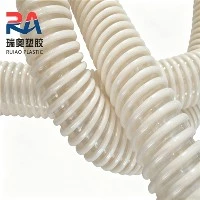
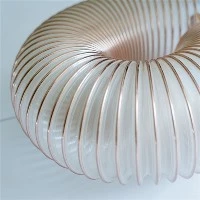


The storage method of PU Plastic Reinforced Hose directly determines its service life, functional performance and appearance. Improper storage may easily trigger aging, hardening, deformation and cracking even before the product is put into service, which will greatly compromise product quality. Therefore, scientific storage practices shall be followed for both warehouse storage and idle placement to avoid losses caused by environmental factors and improper manual handling. First of all, attention shall be paid to core environmental requirements. Made of polyurethane, this hose is sensitive to light, temperature, humidity and corrosive media, so indoor enclosed storage is mandatory and open‑air storage is strictly prohibited. Ultraviolet rays in sunlight serve as a major trigger for hose aging. Long‑term direct exposure will accelerate molecular aging of the tube material, harden and embrittle the pipe wall, fade its color and greatly reduce flexibility and wear resistance. Open‑air rain and dew exposure keeps the hose in persistent damp conditions, which not only attracts dust and impurities but also facilitates mould growth and compromises subsequent usage.
The storage environment shall remain dry and well‑ventilated. Avoid damp low‑lying warehouse areas and locations with wall condensation or pooled water contacting the hose. Keep the hose far from all heat sources such as heating equipment, boilers and sun‑exposed windows. High‑temperature conditions may soften and tackify PU materials and undermine the stability of plastic reinforcement structures. Prolonged high‑temperature storage may result in pipe‑wall adhesion and deformation, further bringing about collapse upon bending and poor resilience in later service. In addition, the storage area shall be kept clean. Keep acids, alkalis, chemical solvents, oil stains and corrosive dust away, for such substances will gradually erode the pipe surface and trigger peeling, tackiness and damage.
As for placement specifications, coil the hose neatly in a relaxed state with uniform coiling curvature. Forcible folding, sharp creases, twisting and stretching must be avoided to prevent irreversible internal‑structure damage. Many hoses deformed in storage tend to suffer from blockage upon bending, poor resilience and bulging after commissioning, all stemming from improper placement. Do not lay hoses directly on the ground. Use pallets or wooden racks for elevation to block ground moisture, dust and abrasion from hard objects, as well as corrosive residues on floors. Never stack heavy articles, plates or equipment on hoses. Long‑term compression will cause continuous deformation of pipe walls and damage reinforced supporting structures, resulting in permanent loss of original toughness and roundness.
For long‑term‑idle maintenance, carry out ventilation inspections every one to two months. Remove surface dust to keep the hose clean and dry. Store hoses separately from sharp hard articles and corrosive materials to prevent scratches and corrosion. Avoid long‑term sealed air‑tight storage, since humid enclosed environments may breed mould and generate peculiar odors and degrade product quality. Compliance with the above‑mentioned storage rules can maximally preserve the toughness, wear resistance and structural stability of PU Plastic Reinforced Hose, prevent storage‑caused losses and guarantee intact performance and qualified service life for various working‑condition applications.