


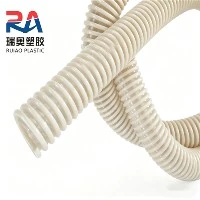
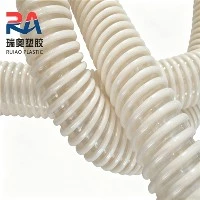
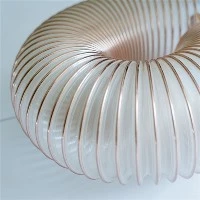

Proper installation of Plastic Reinforced Hose can help reduce bending, wear, and connection problems during use. Therefore, before installation, the actual installation area should be inspected and an appropriate hose route should be planned according to the equipment layout rather than adjusting the hose randomly during installation.
First, inspect the condition of the hose itself. Check the hose surface for obvious scratches, cracks, damage, severe deformation, or other abnormalities, and inspect both ends of the hose to make sure they are intact. If obvious damage is found, determine whether the hose is still suitable for use before installing it on the equipment.
After determining the installation position, the hose should be routed as naturally and smoothly as possible. Although Plastic Reinforced Hose is flexible and can be bent to accommodate the available space, it should not be forcibly folded or bent into excessively sharp curves. If the hose is kept severely bent for a long period in order to avoid equipment or other obstacles, the internal passage may be affected and certain areas may remain under excessive stress.
Twisting should also be avoided during installation. In some situations, an unsuitable hose length or installation direction may cause the operator to rotate the hose to align the connection. This can leave the hose in a twisted condition. If twisting remains near the connection point for an extended period, it may increase stress on the hose body and connection area.
When connecting the hose to equipment, make sure the connection is stable and secure. After installation, check whether the connection is loose or noticeably misaligned. For equipment that vibrates or moves during operation, also observe whether the hose repeatedly pulls on the connection as the equipment moves.
Attention should also be paid to the route through which the hose passes. Avoid sharp metal edges, burrs, protruding components, and other objects that could scratch the hose. If the hose must pass near an equipment edge, adjust the route appropriately to minimize prolonged contact and friction.
Ground installation is another factor that may require attention. If the hose needs to be placed on the floor, avoid areas containing sharp debris whenever possible. Vehicles, equipment, and heavy objects should also be prevented from remaining on top of the hose for extended periods. Continuous compression may deform the hose and affect the internal conveying passage.
Excessive stretching should also be avoided during installation. The hose should remain in a reasonable, relaxed condition rather than being pulled tightly simply to make the hose line look neat. If the equipment moves slightly during operation, sufficient room should be allowed for movement to prevent the hose from being continuously pulled.
After installation, perform an overall inspection. Check whether the hose has obvious bends, twists, compression, or excessive tension, and confirm that the connection points are secure. For Plastic Reinforced Hose used to convey liquids or air, observe the hose during initial operation to make sure there is no leakage, abnormal deformation, or restricted flow.
Overall, when installing Plastic Reinforced Hose, particular attention should be paid to the hose condition, routing, degree of bending, connection method, and surrounding environment. Avoiding excessive bending, twisting, stretching, compression, and friction while keeping the connections secure can help provide better conditions for normal operation.