


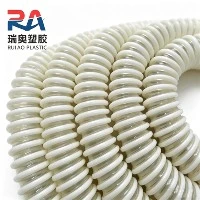
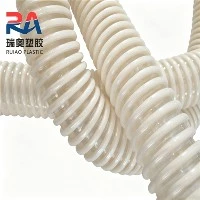


The good flexibility of Pu Plastic Reinforced Spiral Hose is mainly related to its material properties, hose structure, and spiral reinforcement design. Flexibility affects not only how easily a hose can bend but also the convenience of pipeline arrangement, equipment connections, and daily operation. Understanding the factors behind its flexibility helps users select and use the product more appropriately.
First, the properties of polyurethane material are an important factor affecting hose flexibility. Polyurethane is a family of polymer materials with a wide range of performance characteristics. Its softness, elasticity, and abrasion resistance depend on the specific formulation and manufacturing process. With an appropriate material design, the hose wall can bend and deform to a certain extent, allowing it to meet the connection requirements of different pieces of equipment. However, polyurethane materials are not identical across all products, so flexibility may vary between different hoses.
Second, the hose wall structure directly affects bending performance. A well-designed hose wall allows the hose to deform moderately when bent, unlike rigid piping, which is more difficult to redirect. During installation, the hose can be adjusted to suit the surrounding space, making it easier to route around equipment, supports, and other obstacles. This feature is particularly useful in equipment systems with complicated pipeline layouts or connection points that are not fixed.
Third, the spiral reinforcement structure helps balance flexibility and support. Pu Plastic Reinforced Spiral Hose typically features spiral-shaped reinforcement running along the hose body. This structure supports the hose wall and helps maintain the internal passage under suitable operating conditions. Compared with a structure that relies entirely on a soft hose wall, spiral reinforcement can improve shape stability, allowing the hose to retain a certain degree of flexibility while meeting relevant conveying requirements.
Fourth, the spiral structure allows the hose to adapt to different installation directions through continuous bending. In practical applications, the hose may need to connect equipment located in different positions or accommodate certain changes in equipment location. The combination of spiral reinforcement and a flexible hose wall allows the hose to adjust its direction within a reasonable range, reducing the limitations associated with rigid connections. However, this does not mean the hose can be bent without restriction. Excessive bending may obstruct the internal passage or damage the hose wall.
Fifth, flexibility is also affected by the operating environment. Temperature changes, contact with different media, prolonged loading, and repeated bending may affect the hose's performance. Therefore, when selecting Pu Plastic Reinforced Spiral Hose, users should consider not only flexibility but also the product's suitable operating temperature, media compatibility, and working conditions. This helps prevent the hose from being used in an unsuitable environment.
To maintain the hose's flexibility, users should avoid leaving it under heavy objects for extended periods and should not repeatedly bend it beyond reasonable limits. During installation, the pipeline should follow a smooth and natural route, minimizing unnecessary pulling and twisting. If the hose becomes noticeably stiff or develops cracks or reinforcement damage, it should be inspected to determine whether it remains suitable for use.
In summary, the flexibility of Pu Plastic Reinforced Spiral Hose results from the combined effects of its material and structural design. The polyurethane hose wall provides bending capability, while the spiral reinforcement offers structural support. Selecting the appropriate product and arranging the pipeline correctly help maximize these advantages.