


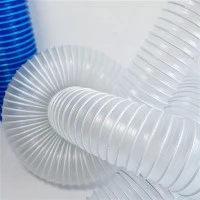


A Food Grade Steel Wire Hose and an ordinary steel wire hose may look similar in appearance and basic construction. Both generally combine a flexible hose body with a steel wire reinforcement structure. However, they differ significantly in material selection, intended applications, media compatibility, and cleaning requirements. Understanding these differences helps users choose the appropriate product for their actual production needs.
First, the two types of hoses differ in their inner tube materials. A Food Grade Steel Wire Hose is mainly designed for transporting food and related media. Therefore, its inner tube material must be suitable for the intended food-contact environment. Common inner tube materials may include rubber or plastic materials that meet the applicable food-contact requirements, depending on the product design.

Ordinary steel wire hoses, on the other hand, are mainly used in general industrial applications. Their inner tube materials are selected according to the characteristics of industrial media, such as ordinary liquids, industrial water, oils, and other compatible substances. These materials do not necessarily meet food-contact requirements. Therefore, the presence of a steel wire reinforcement structure does not mean that an ordinary steel wire hose can be used directly for food transportation.
Second, the two types of hoses have different design priorities. A Food Grade Steel Wire Hose places greater emphasis on food-contact material suitability, internal cleanliness, and hygiene management. Its inner surface is generally designed with cleaning convenience in mind, helping reduce unnecessary material residues and supporting hygiene control during food processing.
The design priorities of ordinary steel wire hoses are mainly related to general industrial transportation requirements, such as structural strength, wear resistance, conveying performance, and adaptability to operating environments. Although some ordinary steel wire hoses may also offer excellent structural performance, this does not automatically mean that they meet food-contact requirements.
Third, their compatible conveying media are different. Depending on the specific material properties, a Food Grade Steel Wire Hose can be used to transport drinking water, fruit juice, dairy products, edible oils, and other suitable liquid food products. Different food media have different chemical compositions, viscosities, and temperature requirements, so compatibility must be confirmed before use.
Ordinary steel wire hoses are mainly used for general industrial liquids and other media compatible with their materials. Typical applications may include industrial water, lubricating oils, and certain industrial liquids. Since industrial media can have different chemical properties, product selection should also be based on the specific application.
Fourth, the two types of hoses have different cleaning and maintenance priorities. A Food Grade Steel Wire Hose requires greater attention to cleaning before and after transportation. When switching between different food media, the hose should be cleaned according to an appropriate procedure to prevent residues from affecting subsequent production.
Ordinary steel wire hoses also require regular cleaning, but their cleaning requirements mainly depend on the industrial medium and equipment operating environment. They do not necessarily need to follow the same hygiene management procedures used in food production.
Overall, the key difference between a Food Grade Steel Wire Hose and an ordinary steel wire hose lies in food-contact material suitability and hygiene management requirements. Users should select the appropriate product according to the actual conveying medium and should not directly substitute an ordinary industrial hose for a food-grade hose.