


As a supplier of PVC duct hoses, I often encounter questions from customers regarding the performance of our products under various conditions. One of the most frequently asked questions is about the flexibility retention of PVC duct hoses at low temperatures. In this blog post, I will delve into this topic, exploring the factors that affect flexibility retention, the importance of this property, and how our PVC duct hoses perform in cold environments.
Understanding Flexibility Retention at Low Temperatures
Flexibility retention refers to the ability of a material to maintain its flexibility and pliability when exposed to low temperatures. For PVC duct hoses, this property is crucial as it determines how well the hoses can be installed, bent, and maneuvered in cold conditions. When PVC is exposed to low temperatures, its molecular structure begins to change, causing the material to become stiffer and more brittle. This can lead to a reduction in flexibility, making the hoses more difficult to handle and increasing the risk of cracking or breaking.
The flexibility retention of PVC duct hoses at low temperatures is influenced by several factors, including the formulation of the PVC compound, the presence of plasticizers, and the thickness of the hose wall. Let's take a closer look at each of these factors.
PVC Compound Formulation
The formulation of the PVC compound plays a significant role in determining the flexibility retention of the duct hoses. Different PVC compounds have different chemical compositions, which can affect their performance at low temperatures. For example, some PVC compounds are formulated with additives that enhance their cold resistance, making them more flexible and less brittle in cold environments. At our company, we use high-quality PVC compounds that are specifically designed to provide excellent flexibility retention at low temperatures. Our compounds are carefully formulated to balance flexibility, durability, and chemical resistance, ensuring that our duct hoses meet the highest standards of performance.
Plasticizers
Plasticizers are additives that are used to increase the flexibility and pliability of PVC. They work by reducing the intermolecular forces between the PVC molecules, allowing them to move more freely and making the material more flexible. However, not all plasticizers are created equal, and some are more effective at low temperatures than others. At our company, we use plasticizers that are specifically designed for use in cold environments. These plasticizers have a low freezing point and excellent cold flexibility, ensuring that our PVC duct hoses remain flexible and pliable even in extremely cold conditions.
Hose Wall Thickness
The thickness of the hose wall also affects the flexibility retention of PVC duct hoses at low temperatures. Thicker walls generally provide better insulation and protection, but they can also make the hoses stiffer and less flexible. On the other hand, thinner walls are more flexible, but they may not provide as much protection or durability. At our company, we offer a range of PVC duct hoses with different wall thicknesses to meet the specific needs of our customers. We can help you choose the right wall thickness for your application based on factors such as temperature, pressure, and flexibility requirements.
Importance of Flexibility Retention at Low Temperatures
The flexibility retention of PVC duct hoses at low temperatures is important for several reasons. First, it affects the ease of installation and handling. In cold environments, it can be difficult to bend and maneuver stiff and brittle hoses, which can increase the time and cost of installation. By using PVC duct hoses with good flexibility retention, you can make the installation process faster, easier, and more efficient.

Second, flexibility retention is important for the long-term performance and durability of the hoses. When PVC hoses become stiff and brittle at low temperatures, they are more likely to crack or break under stress. This can lead to leaks, which can compromise the performance of the ventilation system and pose a safety hazard. By using PVC duct hoses with good flexibility retention, you can reduce the risk of cracking and breaking, ensuring that your ventilation system operates safely and efficiently for years to come.
Finally, flexibility retention is important for the overall quality and reputation of your products. Customers expect high-quality products that perform well under all conditions, including low temperatures. By using PVC duct hoses with good flexibility retention, you can demonstrate your commitment to quality and reliability, which can help you build a strong reputation in the market.
Our PVC Duct Hoses and Flexibility Retention at Low Temperatures
At our company, we are committed to providing our customers with high-quality PVC duct hoses that offer excellent flexibility retention at low temperatures. Our hoses are made from high-quality PVC compounds that are specifically formulated to provide superior performance in cold environments. We use plasticizers that are designed for use in cold conditions, ensuring that our hoses remain flexible and pliable even in extremely cold temperatures.
In addition to our high-quality materials and manufacturing processes, we also offer a range of PVC duct hoses with different wall thicknesses and sizes to meet the specific needs of our customers. Whether you need a small, flexible hose for a residential ventilation system or a large, heavy-duty hose for an industrial application, we have the right product for you.
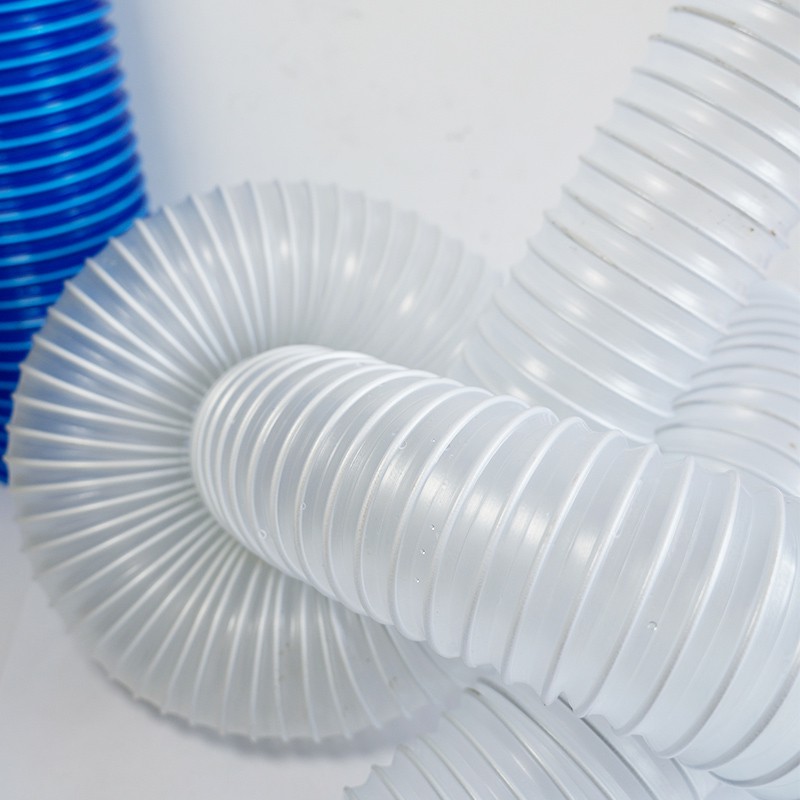
Some of our popular PVC duct hoses include the PVC Dust Collection Hose, Transparent PVC Hose, and Clear PVC Air Duct Hose. These hoses are designed to provide excellent flexibility, durability, and chemical resistance, making them ideal for a wide range of applications.
Contact Us for Your PVC Duct Hose Needs
If you are looking for high-quality PVC duct hoses that offer excellent flexibility retention at low temperatures, look no further than our company. We have a team of experienced professionals who can help you choose the right product for your application and provide you with the support and service you need to ensure a successful installation.
Whether you are a contractor, installer, or end-user, we are here to help. Contact us today to learn more about our PVC duct hoses and how they can meet your specific needs. We look forward to working with you!
References
- ASTM International. (Year). ASTM D1043 - Standard Test Method for Stiffness of Plastics as a Function of Temperature by Means of a Torsional Pendulum.
- ISO (International Organization for Standardization). (Year). ISO 6722 - Road vehicles - Low - voltage cables - Part 1: General requirements.
- Smith, J. (Year). "The Effects of Temperature on the Mechanical Properties of PVC". Journal of Polymer Science.