


Hey there! As a supplier of retractable vacuum hoses, I've seen my fair share of issues with these nifty gadgets. Retractable vacuum hoses are super convenient, but like any mechanical thing, they can run into problems. In this post, I'm gonna walk you through how to troubleshoot some common issues with the retractable mechanism of a vacuum hose.
1. Hose Won't Retract
One of the most common problems is when the hose just won't retract. This can be a real pain, especially if you're in a hurry to pack up your vacuum.
Check for Obstructions
The first thing you should do is look for any blockages in the hose. Sometimes, small debris like dust, dirt, or even small objects can get stuck inside the hose, preventing it from retracting smoothly. Start by inspecting the end of the hose where it connects to the vacuum. Remove any visible debris. You can also try using a long, thin object like a wire hanger to gently push out any blockages further down the hose.
Inspect the Springs or Coils
Most retractable hoses use springs or coils to retract. Over time, these can get damaged or lose their tension. Take a look at the springs or coils on your hose. If you notice any visible damage, such as a broken spring or a coil that's out of place, you might need to replace them. You can usually find replacement parts online or at a hardware store. Make sure to get the right size and type of spring or coil for your specific hose model.
Lubricate Moving Parts
Another reason the hose might not retract is that the moving parts are dry or dirty. Use a silicone-based lubricant to lubricate the areas where the hose slides or the springs/coils move. This can help reduce friction and make the retracting process smoother. Just be careful not to use too much lubricant, as it can attract more dirt and debris.
2. Hose Retracts Too Slowly
If your hose retracts, but it does so very slowly, there are a few things you can check.
Check the Tension Adjustment
Some retractable hoses have a tension adjustment feature. This allows you to control how quickly the hose retracts. Look for a small screw or knob on the hose assembly. If you turn it clockwise, it will usually increase the tension, making the hose retract faster. If you turn it counterclockwise, it will decrease the tension, making the hose retract more slowly. Adjust it in small increments until you find the right speed for your needs.
Examine the Hose for Kinks or Bends
Kinks or bends in the hose can slow down the retracting process. Straighten out any kinks or bends in the hose. You can do this by gently pulling on the hose to stretch it out or by using your hands to massage the kinked area. If the kink is severe, you might need to cut out the damaged section and reattach the hose using a hose connector.
3. Hose Retracts Too Forcefully
On the other hand, if your hose retracts too forcefully, it can be dangerous and might even damage the hose or the vacuum.
Reduce the Tension
Similar to the above, if your hose has a tension adjustment feature, turn the screw or knob counterclockwise to decrease the tension. This will make the hose retract more slowly and with less force.

Check for Over - Tightened Springs or Coils
If the springs or coils are too tight, they can cause the hose to retract too forcefully. You might need to loosen them slightly. However, this can be a bit tricky, so if you're not comfortable doing it yourself, it's best to take the hose to a professional for repair.
4. Hose Gets Stuck Mid - Retraction
This is another frustrating issue. When the hose gets stuck halfway through the retracting process, it can be a sign of a more serious problem.
Inspect the Guide Rails or Tracks
Many retractable hoses have guide rails or tracks that help the hose retract in a straight line. If these are dirty, damaged, or misaligned, the hose can get stuck. Clean the guide rails or tracks with a soft cloth and some mild detergent. If they're damaged, you might need to replace them.
Look for Internal Damage
There could be internal damage to the hose, such as a broken piece inside the retracting mechanism. In this case, it's best to take the hose to a professional repair shop. They have the tools and expertise to diagnose and fix the problem.
Related Products
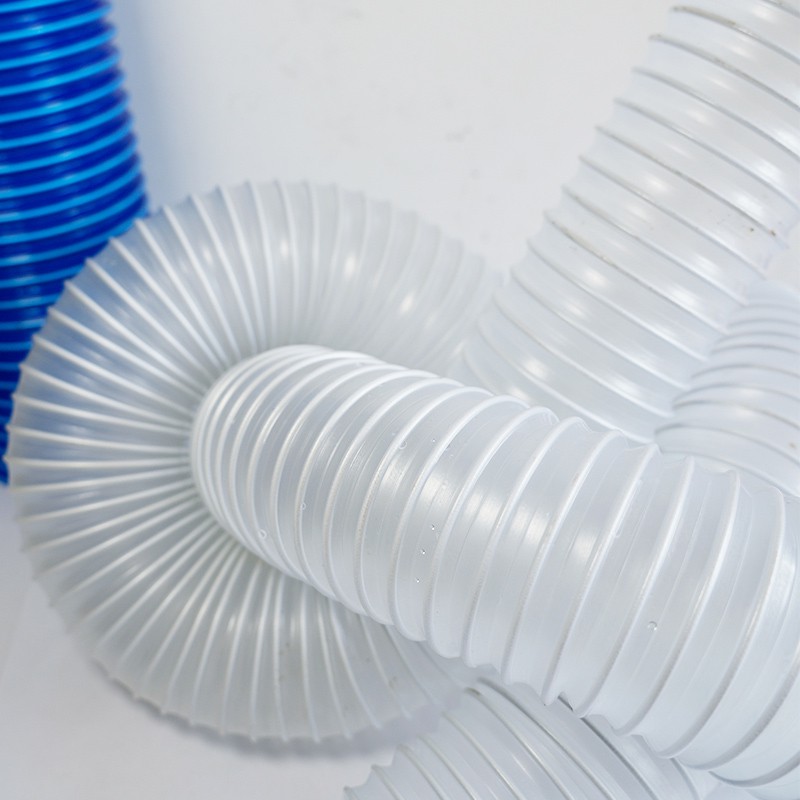
If you're in the market for a new retractable vacuum hose or other related products, we've got you covered. Check out our PVC Woodworking Vacuum Hose, which is perfect for woodworking projects. It's durable and has a great retractable mechanism. We also offer the Engraving Machine Telescopic Vacuum Hose, designed specifically for engraving machines. And for general dust collection needs, our PVC Dust Collection Hose is a top - notch choice.
Conclusion
Troubleshooting issues with the retractable mechanism of a vacuum hose doesn't have to be a headache. By following these simple steps, you can often fix the problem yourself. However, if you're still having trouble or if you're not comfortable doing the repairs, don't hesitate to reach out. We're here to help you with all your retractable vacuum hose needs. Whether you need advice on troubleshooting, replacement parts, or you're looking to purchase a new hose, we're just a message away. So, if you're interested in our products or have any questions, feel free to contact us for a purchase negotiation. We'll be happy to assist you!
References
- "Vacuum Cleaner Repair Manuals" - Various manufacturers' manuals
- "Home Improvement Guides for Small Appliances" - Online DIY resources