


Can PVC Hose Be Used for Transferring Granular Materials?
As a PVC hose supplier, I often encounter questions from customers regarding the suitability of PVC hoses for various applications. One common query is whether PVC hoses can be used for transferring granular materials. In this blog post, I'll delve into this topic, exploring the factors to consider and the potential advantages and limitations of using PVC hoses for this purpose.
Understanding PVC Hoses
PVC, or polyvinyl chloride, is a widely used thermoplastic polymer known for its versatility, durability, and cost - effectiveness. PVC hoses are manufactured by extruding PVC material into a tubular shape, and they come in a variety of sizes, wall thicknesses, and configurations to meet different industrial and domestic needs.
Suitability for Transferring Granular Materials
The answer to whether PVC hoses can be used for transferring granular materials is yes, but with certain considerations.
Advantages
- Smooth Interior Surface: PVC hoses typically have a smooth interior surface. This smoothness reduces friction between the hose wall and the granular materials, allowing for a relatively unobstructed flow. For example, when transferring small plastic granules or grains, the smooth surface helps prevent the granules from getting stuck or bridging inside the hose, ensuring a continuous and efficient transfer process.
- Chemical Resistance: PVC has good resistance to many chemicals. This is beneficial when the granular materials are associated with mild chemical substances or when the environment where the transfer occurs is chemically active. For instance, in some agricultural applications where fertilizers (which may have a certain chemical composition) are transferred in granular form, PVC hoses can withstand the chemical properties of the fertilizers without significant degradation.
- Flexibility: PVC hoses are flexible, which makes them easy to install and maneuver. When transferring granular materials in a complex or confined space, the flexibility of the PVC hose allows it to be routed around obstacles, making the transfer system more adaptable. For example, in a small - scale manufacturing plant where space is limited, a flexible PVC hose can be bent and adjusted to connect different processing units for the transfer of granular raw materials.
- Cost - Efficiency: Compared to some other types of hoses made from more exotic materials, PVC hoses are relatively inexpensive. This makes them an attractive option for businesses looking to minimize costs while still achieving an effective granular material transfer solution. For small - to - medium - sized enterprises, the cost savings associated with using PVC hoses can be significant, especially when large lengths of hoses are required.
Limitations
- Abrasion Resistance: Granular materials can be abrasive, especially those with sharp edges or hard textures. Over time, the continuous flow of such materials through a PVC hose can cause abrasion on the inner wall of the hose. For example, transferring quartz sand or crushed ore granules can gradually wear down the PVC surface, leading to leaks or a reduced service life of the hose.
- Temperature Sensitivity: PVC has a limited temperature range within which it can perform optimally. High temperatures can cause the PVC to soften and lose its shape, while extremely low temperatures can make the hose brittle. If the granular materials being transferred are at a high temperature or if the transfer occurs in a high - or low - temperature environment, the performance of the PVC hose may be compromised. For instance, in a foundry where hot metal granules are transferred, a PVC hose may not be suitable due to the high - temperature conditions.
- Static Electricity Buildup: When granular materials flow through a PVC hose, static electricity can build up. This is a concern, especially when the granular materials are flammable or combustible. The static discharge can potentially ignite the materials, leading to safety hazards. For example, in the transfer of powdered chemicals or fine plastic granules that are flammable, special precautions need to be taken to prevent static electricity buildup if a PVC hose is used.
Applications and Considerations
- Agriculture: In the agricultural sector, PVC hoses are commonly used for transferring granular fertilizers, seeds, and animal feed. When using PVC hoses for these applications, it's important to ensure that the hoses are of an appropriate diameter to handle the volume of the granular materials. Also, regular inspection for abrasion is necessary, especially when transferring fertilizers that may contain small, hard particles.
- Manufacturing: In manufacturing processes, PVC hoses can be used for transferring plastic granules, rubber compounds, or other raw materials in granular form. However, in high - precision manufacturing where any contamination or wear of the hose can affect the quality of the final product, alternative hoses with better abrasion resistance may be preferred.
- Food Industry: PVC hoses that are approved for food contact can be used for transferring granular food products such as sugar, salt, or grains. These hoses need to meet strict hygiene and safety standards to ensure that they do not contaminate the food. Additionally, the hoses should be easy to clean to prevent the buildup of food residues.
Our PVC Hose Products for Granular Material Transfer
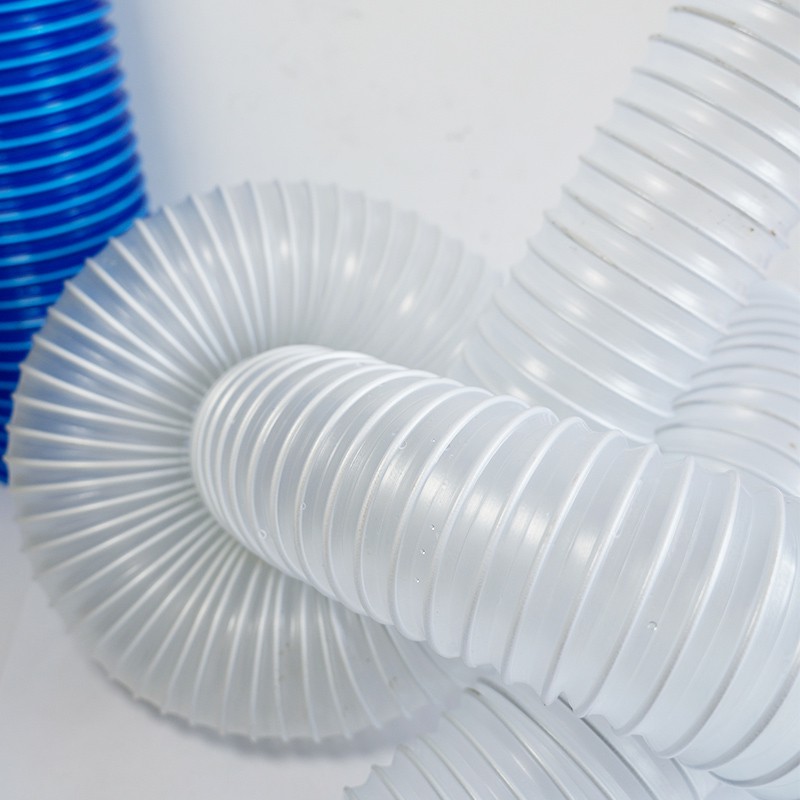
At our company, we offer a range of PVC hoses that can be suitable for transferring granular materials. Our PVC Retractable Vacuum Hose is designed with features that address some of the challenges associated with granular material transfer. It has a reinforced structure that provides better resistance to abrasion, and its retractable design allows for easy storage and handling.
The Retractable Vacuum Hose is another option. It is flexible and can be adjusted to different lengths, making it ideal for applications where the transfer distance may vary.
Our PVC Dust Collection Hose can also be used in some granular material transfer scenarios, especially when there is a need to collect dust generated during the transfer process. This hose has a smooth interior surface to ensure efficient material flow and is designed to withstand the rigors of continuous use.

Conclusion
In conclusion, PVC hoses can be used for transferring granular materials, but it's essential to carefully consider the nature of the granular materials, the operating conditions, and the specific requirements of the transfer process. While PVC hoses offer several advantages such as smooth flow, chemical resistance, flexibility, and cost - efficiency, they also have limitations in terms of abrasion resistance, temperature sensitivity, and static electricity buildup.
If you are considering using PVC hoses for granular material transfer, we encourage you to reach out to us for more information. Our team of experts can help you select the most suitable PVC hose for your specific application and provide guidance on installation, maintenance, and safety. Contact us today to start a discussion about your granular material transfer needs and explore how our PVC hoses can meet your requirements.
References
- "Handbook of Thermoplastics" by O. Olabisi.
- "Plastics Technology Handbook" by Charles A. Harper.
- Industry reports on PVC hose applications in various sectors.