


Can I use a transparent PVC hose for steam transfer?
As a supplier of Transparent PVC Hose, I often encounter customers asking whether our transparent PVC hoses can be used for steam transfer. This is a crucial question that requires a comprehensive understanding of the properties of PVC materials and the characteristics of steam transfer. In this blog, I'll delve into this topic to provide you with a well - informed answer.
Understanding Transparent PVC Hose
First, let's take a look at what transparent PVC hoses are. Our Transparent PVC Hose is made from polyvinyl chloride (PVC), a synthetic plastic polymer. PVC is well - known for its excellent transparency, which allows users to easily observe the flow of the medium inside the hose. It is also lightweight, flexible, and relatively inexpensive compared to some other types of hoses. These features make it a popular choice for a wide range of applications, such as in aquariums, small - scale liquid transfer systems, and some light - duty industrial operations.
The manufacturing process of our transparent PVC hoses ensures a smooth inner surface, which minimizes flow resistance and allows for efficient transfer of fluids. Moreover, PVC has good chemical resistance to many common chemicals, oils, and solvents, making it suitable for various working environments.
Characteristics of Steam Transfer
Steam is a high - energy medium. When water is heated to its boiling point and turns into steam, it contains a large amount of latent heat. Steam transfer usually involves high temperatures and pressures, depending on the specific application. For example, in industrial steam systems, the temperature can range from 100°C (the boiling point of water at standard atmospheric pressure) up to several hundred degrees Celsius, and the pressure can be several bar or even higher.
In addition to high temperature and pressure, steam may also carry impurities such as minerals, dissolved gases, and corrosion products. These impurities can potentially cause damage to the hose over time.
Compatibility of Transparent PVC Hose with Steam Transfer
Now, let's discuss whether our transparent PVC hoses are suitable for steam transfer.
Temperature Resistance
One of the main limitations of PVC is its relatively low temperature resistance. The maximum continuous operating temperature of standard PVC is typically around 60 - 80°C. When exposed to temperatures above this range, PVC begins to soften, lose its mechanical strength, and may even deform. In steam transfer applications where the temperature often exceeds 100°C, standard transparent PVC hoses will not be able to withstand the heat. The softening of the PVC can lead to a loss of pressure - holding capacity, leakage, and ultimately, failure of the hose.
However, there are some specially formulated PVC materials with enhanced temperature resistance. These high - temperature PVC hoses can withstand temperatures up to around 90 - 100°C. But even these hoses may not be sufficient for high - temperature steam applications where the steam temperature is much higher.
Pressure Resistance
In addition to temperature, pressure is another important factor. Steam transfer systems often operate under pressure. PVC hoses are generally designed for low - to medium - pressure applications. High - pressure steam can cause the PVC hose to expand, and if the pressure exceeds the hose's rated pressure, it may burst, posing a serious safety hazard.
The pressure rating of our transparent PVC hoses is determined during the manufacturing process, taking into account factors such as the wall thickness of the hose, the quality of the PVC material, and the reinforcement structure (if any). But these pressure ratings are usually much lower than what is required for high - pressure steam transfer.
Chemical and Physical Degradation
The impurities in steam can also cause chemical and physical degradation of the PVC hose. For example, some minerals and dissolved gases in steam can react with the PVC, leading to discoloration, embrittlement, and reduced chemical resistance. Over time, these effects can weaken the hose and shorten its service life.
Moreover, the high - velocity flow of steam can cause erosion of the inner surface of the hose. The impact of the steam and the impurities it carries can wear away the PVC material, increasing the risk of leakage.
Situations Where Transparent PVC Hose May Be Used for Steam Transfer
In some very specific and low - demand situations, a transparent PVC hose might be used for steam transfer.
Low - Temperature and Low - Pressure Steam
If the steam is at a relatively low temperature (close to 100°C) and low pressure, and the transfer is for a short - term or intermittent operation, a high - temperature - resistant PVC hose may be considered. For example, in some small - scale laboratory setups or home - based steam projects where the steam is generated at a low power and the transfer distance is short, a specially formulated PVC hose could potentially work.
Visual Monitoring
In some cases, the transparency of the PVC hose is highly desired for visual monitoring of the steam flow. If the temperature and pressure requirements are within the limits of the PVC hose, it can be used to observe the steam flow, detect any blockages or abnormal conditions, and ensure the proper operation of the system.
Alternative Hoses for Steam Transfer
If the steam transfer application requires high temperatures and pressures, alternative hoses are recommended.
Rubber Hoses
Rubber hoses, such as EPDM (ethylene propylene diene monomer) rubber hoses, have better temperature and pressure resistance than PVC. EPDM rubber can withstand continuous operating temperatures up to around 150 - 180°C and can handle relatively high pressures. Rubber hoses also have good flexibility and are less likely to crack or break under dynamic conditions.
Metal Hoses
Metal hoses, such as stainless - steel braided hoses, are excellent for high - temperature and high - pressure steam transfer. They can withstand extremely high temperatures (up to several hundred degrees Celsius) and pressures. Metal hoses also have high mechanical strength and are resistant to corrosion and abrasion.
Conclusion
In general, using a standard transparent PVC hose for steam transfer is not recommended due to its limited temperature and pressure resistance. However, in some low - temperature and low - pressure situations, or when visual monitoring is crucial and the conditions are within the hose's limits, a specially formulated PVC hose may be a viable option.

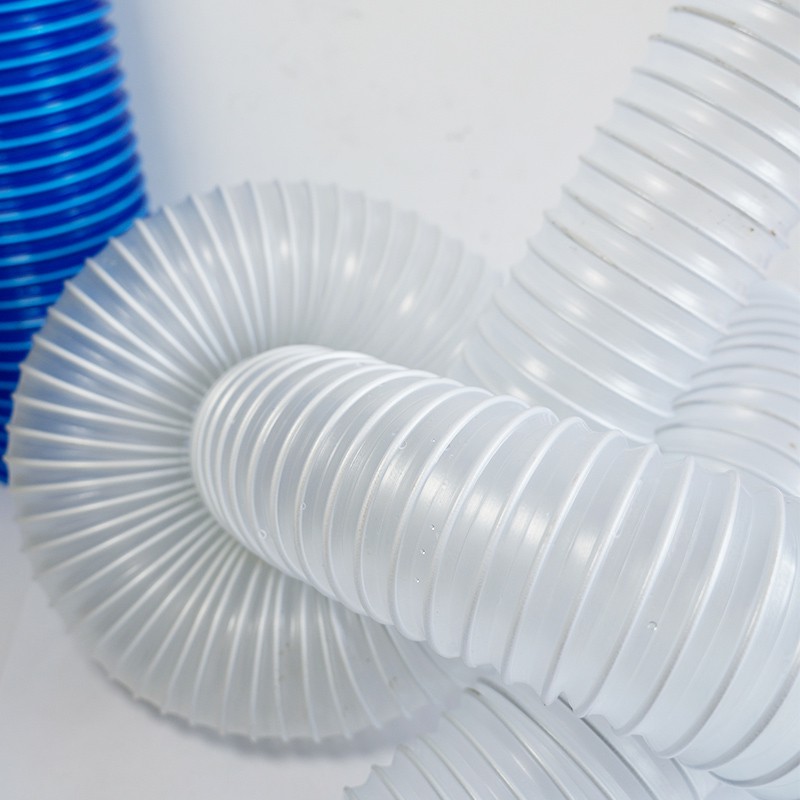
As a supplier of Transparent PVC Hose, we always strive to provide our customers with the most suitable products for their specific needs. If you are considering a hose for steam transfer, please contact us to discuss your requirements in detail. We can help you determine the best solution, whether it's our PVC hoses for suitable applications or recommend alternative hoses for more demanding steam transfer tasks. We also offer other types of hoses such as Retractable Vacuum Hose and PVC Dust Collection Hose for different industrial and household uses.
If you have any questions or are interested in our products, don't hesitate to reach out to us for further information and a purchase negotiation.
References
- "Handbook of Plastic Materials and Technology" by Irvin I. Rubin
- "Steam Engineering: Principles and Practice" by ASME (American Society of Mechanical Engineers)
- Technical data sheets of PVC materials provided by major PVC manufacturers